

Why Businesses Need an Integrated POS Ecosystem
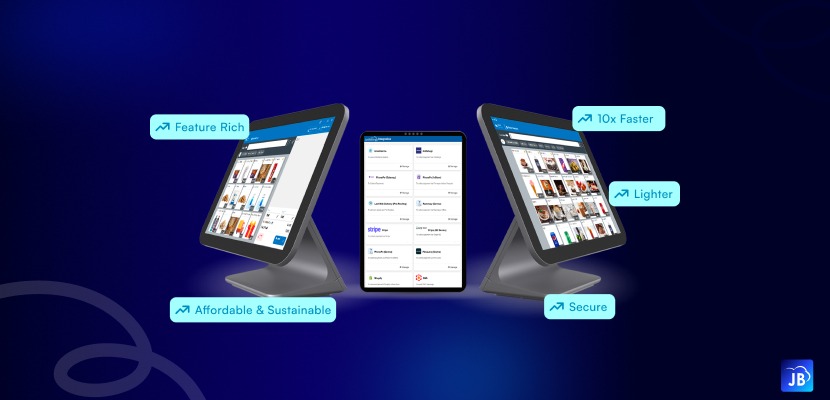
Modern businesses operate across multiple channels — in-store sales, online orders, delivery platforms, payment gateways, and customer communication tools. Managing these disconnected systems separately often leads to operational inefficiencies, data errors, and lost revenue opportunities.
This is where an integrated POS ecosystem becomes critical. Instead of relying on isolated tools, businesses can connect their point-of-sale system, payments, inventory, delivery apps, analytics, and communication platforms into one unified environment.
According to industry reports, businesses using integrated retail technologies experience up to 30–40% improvement in operational efficiency and significantly fewer manual errors.
In this article, we’ll explore why an integrated POS ecosystem is essential for modern businesses, how POS integrations transform operations, and how solutions like Just Billing help companies build a scalable, connected system.
The Growing Need for POS Ecosystems in Modern Businesses
Industry Context: POS Software & Retail Technology
The POS industry has evolved dramatically in the past decade. Traditional billing systems only processed transactions. Today’s systems function as central operational hubs.
Businesses must handle:
- Digital payments
- Online delivery platforms
- Inventory management
- Customer loyalty programs
- Data analytics
- Multi-location operations
Without integration, teams often rely on multiple disconnected tools, which leads to:
- Manual data entry
- Duplicate work
- Reporting inconsistencies
- Delayed decision-making
An integrated POS ecosystem eliminates these issues by connecting every operational component through seamless POS integrations.
This unified system enables businesses to operate faster, scale more efficiently, and deliver better customer experiences.
What Is an Integrated POS Ecosystem?
An integrated POS ecosystem refers to a connected network of business tools that communicate with the POS system in real time.
Instead of working in isolation, systems like payments, inventory, analytics, delivery apps, and messaging platforms function as part of one unified platform.
A typical POS ecosystem connects:
- Payment gateways
- Inventory management
- Customer management systems
- Online ordering platforms
- Delivery aggregators
- Accounting tools
- Communication channels
For example, when a customer places an order:
- The POS processes the order.
- Inventory automatically updates.
- Payment is processed instantly.
- Sales data updates financial reports.
- The customer receives a digital invoice.
All of this happens automatically within a fully integrated system.
The Key Benefits of an Integrated POS Ecosystem
1. Centralized Business Operations
One of the biggest advantages of POS integrations is the ability to manage everything from one central platform.
Instead of switching between multiple tools, businesses can monitor:
- sales transactions
- stock levels
- delivery orders
- payment reports
- customer activity
This centralization reduces complexity and improves operational visibility.
2. Real-Time Data Across All Channels
Businesses today rely heavily on data for decision-making. However, disconnected systems often create data silos.
An integrated POS ecosystem ensures that all systems update instantly.
For example:
- Inventory levels update immediately after sales.
- Online and offline orders sync automatically.
- Profit and loss reports reflect real-time data.
This real-time visibility helps business owners make faster and smarter decisions.
3. Seamless Payment Processing
Payments are one of the most critical parts of business operations. Modern POS ecosystems integrate with multiple payment providers to support flexible payment options.
Customers now expect options like:
- credit and debit cards
- digital wallets
- QR payments
- online payment gateways
POS payment integrations ensure transactions are processed quickly while maintaining secure financial records.
Businesses that offer multiple payment options often see up to 20% higher customer conversion rates.
4. Automated Inventory Synchronization
Inventory management becomes increasingly complex as businesses grow.
Without integrations, stock updates must be entered manually, increasing the risk of errors.
With a connected POS ecosystem:
- inventory automatically adjusts after every sale
- online and offline stock stays synchronized
- low-stock alerts are generated automatically
This automation prevents stockouts and improves purchasing decisions.
5. Better Customer Experience
Customer expectations are higher than ever. They expect fast checkouts, digital invoices, and flexible payment options.
Integrated POS systems allow businesses to provide:
- instant digital receipts
- loyalty rewards
- personalized offers
- fast checkout experiences
By integrating customer data into the POS ecosystem, businesses can build stronger relationships and increase repeat purchases.
Real-World Example: Integrated POS in a Restaurant
Consider a busy restaurant handling dine-in orders, online delivery, and takeaway requests.
Without integrations, the staff must manually enter orders from delivery apps into the POS system, which increases the risk of mistakes.
With restaurant POS integrations, the process becomes seamless:
- Orders from delivery platforms appear automatically in the POS.
- The kitchen receives orders instantly.
- Inventory adjusts automatically.
- Payments are recorded and tracked.
- Sales analytics update in real time.
This streamlined workflow reduces staff workload while improving service speed.
Best Practices for Building an Effective POS Ecosystem
Businesses should follow certain strategies when implementing POS integrations.
Choose Scalable POS Software
Select a system that supports multiple integrations and future growth. Businesses often expand into new channels such as online ordering, loyalty programs, or international markets.
Prioritize Real-Time Synchronization
Systems must update instantly across all connected tools to prevent reporting errors and operational confusion.
Ensure Security and Compliance
Payment integrations must comply with industry security standards to protect customer data and financial transactions.
Focus on Automation
Automation reduces manual workload and allows teams to focus on customer service and strategic growth.
How Just Billing Provides a Complete POS Ecosystem
Modern businesses require more than a billing tool—they need a complete POS ecosystem that connects operations across multiple channels.
This is where Just Billing stands out.
The platform offers a powerful ecosystem designed to support both retail stores and restaurants through advanced POS integrations.
Key capabilities include:
Smart Payment Integrations
Businesses can accept multiple payment methods including cards, PayPal, Stripe, and in-store transactions. This flexibility ensures seamless payment processing for both local and international customers.
Delivery Platform Integrations
Restaurants can manage delivery orders directly within the POS through seamless Swiggy and Zomato integrations, eliminating manual entry and improving operational efficiency.
QR Menu Ordering
Contactless ordering through QR menus allows customers to browse menus and place orders instantly, reducing wait times and improving service speed.
WhatsApp Invoicing and Payment Reminders
Businesses can send invoices directly via WhatsApp, making payment collection faster and more convenient.
Advanced Inventory and Product Management
Support for product variants and food classifications such as Veg, Non-Veg, and Egg simplifies menu and product management.
Real-Time Profit & Loss Reporting
Business owners gain instant insights into financial performance through real-time reporting dashboards.
Multi-Currency and Global Support
Businesses operating internationally can manage transactions in multiple currencies while maintaining tax compliance through country-based Tax ID capture.
Flexible POS Plans
With GO, PRO, and MAX subscription plans, businesses can choose the level of functionality that fits their growth stage.
The Future of Business Operations Is Integrated
Technology continues to reshape how businesses operate. Fragmented tools and disconnected systems are no longer sustainable in fast-moving markets.
Businesses that adopt an integrated POS ecosystem gain several advantages:
- faster operations
- better financial visibility
- improved customer experiences
- scalable business growth
By connecting payments, inventory, delivery platforms, and customer engagement tools, integrated POS systems become the central nervous system of modern commerce.
Conclusion
An integrated POS ecosystem is no longer a luxury—it is a necessity for businesses aiming to scale efficiently.
POS integrations streamline operations, eliminate manual work, and give businesses the real-time insights needed to make better decisions. From payment processing to delivery management and inventory tracking, integrated systems simplify complex workflows.
Solutions like Just Billing demonstrate how modern POS platforms can unify operations, empower businesses with automation, and support growth across multiple sales channels.
Businesses that invest in integrated POS technology today position themselves for stronger efficiency, better customer experiences, and sustainable growth in the years ahead.
FAQ's:
An integrated POS ecosystem is a connected network of tools that work with a POS system, including payments, inventory, delivery platforms, and customer management software.
POS integrations automate workflows, reduce manual work, improve data accuracy, and provide a centralized platform for managing business operations.
Integrated POS systems update stock levels automatically after every sale, helping businesses maintain accurate inventory records and avoid stock shortages.
Businesses should look for payment integrations, delivery platform connectivity, inventory automation, reporting tools, and customer management capabilities.
Just Billing offers a complete POS ecosystem with integrations for payments, WhatsApp invoicing, delivery platforms, inventory management, and financial reporting.

Search for article
Popular Posts
Download Our App
Share the Post
Explore our POS Software
Retail Billing Software
Super market, Grocery, Electronics, Gift Shops & Stationery
Restaurant Billing Software
Take away, Self service, Ice cream parlor, Coffee shop, Bakery
POS for Service Business
Accountant, Lawyer, Consultant, Photographer
Join Our Newsletter
Receive the latest blog posts, industry insights & exclusive Just Billing updates directly to your inbox.