
How POS-Based P&L Helps Business Owners Make Faster Decisions
Running a retail store or restaurant often feels like making decisions in the dark. Many business owners rely on monthly accounting reports to understand whether they are profitable. The problem is that by the time those reports arrive, the opportunity to fix issues or capitalize on trends has already passed.
This is where POS-based P&L reporting becomes a powerful advantage.
Instead of waiting until the end of the month, modern POS systems generate real-time POS reports that show profit, expenses, and sales performance instantly. This allows business owners to react quickly, control costs, and make smarter operational decisions.
For fast-moving businesses such as retail stores, restaurants, and multi-location outlets, having immediate financial insights can mean the difference between growth and stagnation.
The Industry Shift Toward Real-Time Financial Visibility
Across the retail and restaurant POS software industry, businesses are moving away from traditional accounting workflows toward real-time financial tracking.
According to industry estimates, over 65% of small and mid-sized businesses now prefer POS systems that include built-in financial reporting. The reason is simple: traditional bookkeeping shows what happened in the past, while POS-based analytics reveal what is happening right now.
Modern businesses operate in a fast-changing environment:
- Customer preferences shift quickly
- Inventory costs fluctuate
- Marketing campaigns need rapid evaluation
- Staff productivity affects profitability daily
A POS system that automatically tracks sales, inventory costs, discounts, and expenses can generate an instant Profit & Loss overview, helping business owners stay in control.
What Is POS-Based P&L Reporting?
A POS-based P & L report is a real-time financial summary generated directly from a point-of-sale system. Instead of relying solely on external accounting tools, the POS continuously analyzes transactions and operational data to calculate profitability.
These reports typically combine several operational data points such as:
- Sales revenue from POS transactions
- Cost of goods sold based on inventory tracking
- Discounts and promotional adjustments
- Payment processing data
- Daily or hourly sales performance
Because all these metrics come from the same operational platform, the report reflects live business performance rather than delayed accounting records.
This means business owners can open their POS dashboard and immediately see whether the business is making or losing money that day.
Why Faster Decisions Matter for Business Growth
In retail and restaurant operations, timing is everything.
Imagine a café owner discovering that a popular menu item has a very low profit margin. If this insight comes at the end of the month, thousands of low-margin sales may have already occurred. But if the owner sees this information in real time, they can immediately adjust pricing or modify ingredients.
Similarly, a retail store running a weekend promotion can instantly track whether the campaign is generating profit or simply increasing revenue without improving margins.
Real-time POS reporting enables faster responses in areas such as:
Pricing adjustments
Business owners can quickly identify products with shrinking margins and update pricing strategies.
Inventory purchasing
Real-time P&L insights help avoid overstocking slow-moving products and prioritize profitable inventory.
Staff performance
Managers can see peak sales periods and allocate staff accordingly to maximize revenue.
Promotion effectiveness
Discount campaigns can be evaluated instantly to determine whether they drive profitable sales.
When financial insights are immediate, decision-making becomes proactive instead of reactive.
Key Benefits of POS-Based P&L for Business Owners
Real-Time Profit Tracking
Traditional accounting reports often appear weeks after transactions occur. With real-time POS reports, profitability updates automatically with every sale.
Business owners can track daily profit trends and identify financial issues early.
Faster Operational Decisions
Real-time analytics allow managers to respond instantly to sales patterns, customer demand, and inventory performance.
Instead of guessing what works, decisions are based on live data.
Improved Cost Control
Because POS systems track inventory costs and discounts alongside sales data, owners can easily detect areas where profits are leaking.
This visibility helps reduce waste and maintain healthy margins.
Simplified Financial Monitoring
Many small business owners struggle with complicated accounting reports. POS-based dashboards simplify financial tracking with easy-to-understand visuals, charts, and summaries.
The result is better financial awareness without needing deep accounting expertise.
How POS-Based P&L Works in Practice
A POS system calculates profit automatically by combining transaction data with inventory costs and operational metrics.
Here is a simplified workflow.
First, every sale is recorded in the POS system. The software automatically logs product details, price, quantity, and payment method.
Next, the system compares the sale price with the product’s cost price stored in the inventory database.
The difference between the selling price and cost forms the gross profit for that transaction.
Over time, the POS aggregates this information to generate daily, weekly, and monthly profit summaries.
Modern systems also visualize this data through dashboards, charts, and performance indicators.
As a result, business owners gain an instant overview of their financial health without waiting for accountants or spreadsheets.
Real-World Example: Restaurant Profit Optimization
Consider a mid-sized restaurant managing dozens of menu items.
Using traditional accounting, the owner reviews financial results at the end of each month. By that time, certain dishes may have been consistently underperforming.
With POS-based P&L reporting, the restaurant owner can see:
- Daily sales for each menu item
- Profit margin per dish
- Ingredient cost impact
- Best-performing menu categories
Within a few days, the owner may discover that a popular dish generates high sales but low profit due to expensive ingredients.
By adjusting portion sizes or pricing, the restaurant can significantly improve margins without affecting customer demand.
Best Practices for Using POS Financial Reports
To maximize the value of POS-based P&L reporting, businesses should follow several practical strategies.
First, review financial dashboards regularly. Checking reports daily or weekly helps detect trends early.
Second, monitor product-level profitability rather than focusing only on total sales revenue.
Third, align POS insights with operational decisions such as menu updates, product bundling, or promotional campaigns.
Finally, integrate POS reporting with inventory management to ensure accurate cost tracking.
When these practices are followed consistently, real-time analytics become a powerful decision-making tool.
How Just Billing Enables Real-Time Profit Visibility
Modern businesses need a POS platform that does more than process transactions. They need a system that provides complete operational visibility.
Just Billing delivers exactly that.
The platform includes real-time P & L reporting, allowing business owners to monitor financial performance directly from their POS dashboard.
Because the system connects sales data, inventory tracking, and payment processing, it automatically generates accurate financial insights without manual calculations.
Key capabilities include:
- Real-time POS reporting dashboards
- Inventory and cost tracking for accurate profit calculation
- Integrated payment management with cards, Stripe, PayPal, and in-store payments
- Online delivery integrations with Swiggy and Zomato
- Advanced inventory and product variant management
- WhatsApp invoices and automated payment reminders
- Multi-currency support for global operations
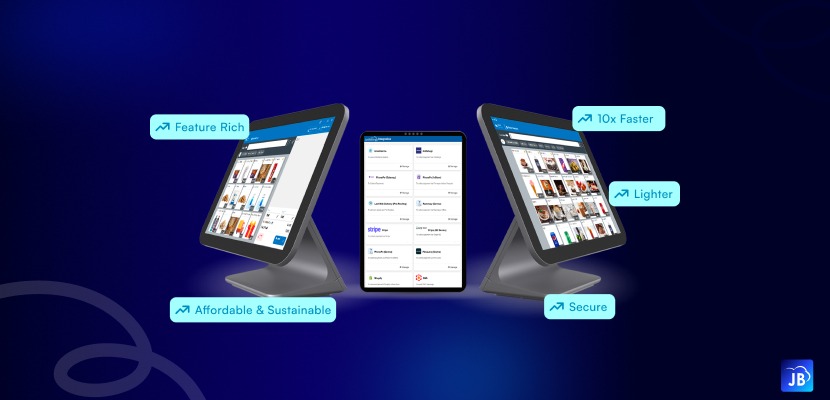
Businesses can manage operations from a centralized platform available across Windows, Android, iOS, and web-based back office systems.
By combining operational control with real-time analytics, Just Billing helps businesses move from reactive management to proactive growth.
The Future of POS Reporting
The next generation of POS software is moving toward predictive analytics and AI-driven financial insights.
Future POS systems will not only show current profitability but also forecast trends based on historical data. Businesses will receive alerts when margins drop, costs increase, or sales patterns change.
For retail and restaurant owners, this evolution means financial intelligence will become an everyday operational tool rather than a back-office function.
Businesses that adopt real-time reporting today will be better prepared for this data-driven future.
Conclusion
Making business decisions based on outdated financial reports can slow growth and hide potential problems.
POS-based P&L reporting changes this dynamic completely. By providing real-time financial insights, it allows business owners to track profitability, control costs, and make faster decisions that directly impact revenue.
Whether it is adjusting pricing, optimizing inventory, or evaluating promotions, access to live financial data creates a powerful competitive advantage.
Platforms like Just Billing make this level of financial visibility accessible to retail stores, restaurants, and service businesses of all sizes.
FAQ's:
POS-based P&L reporting is a financial analysis generated directly from a point-of-sale system that tracks revenue, costs, and profit in real time.
They provide immediate visibility into sales performance, profit margins, and operational trends, allowing faster and more informed business decisions.
Daily or weekly reviews are recommended to monitor sales trends, control expenses, and identify opportunities for improvement.
Key features include real-time dashboards, inventory cost tracking, sales analytics, payment integration, and automated financial reports.
Just Billing provides integrated POS reporting, real-time P&L dashboards, inventory management, and payment integrations that help businesses track profitability instantly.

Search for article
Popular Posts
Download Our App
Share the Post
Explore our POS Software
Retail Billing Software
Super market, Grocery, Electronics, Gift Shops & Stationery
Restaurant Billing Software
Take away, Self service, Ice cream parlor, Coffee shop, Bakery
POS for Service Business
Accountant, Lawyer, Consultant, Photographer
Join Our Newsletter
Receive the latest blog posts, industry insights & exclusive Just Billing updates directly to your inbox.