

Why Product Variants Matter in Restaurant POS Systems
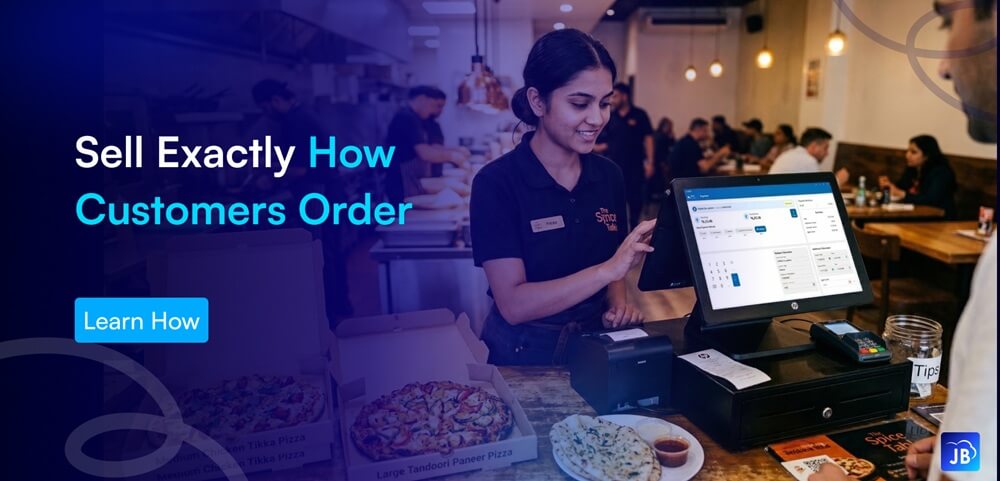
Walk into any modern restaurant today and you’ll notice something interesting: customers rarely order a menu item exactly as it appears. Someone wants a large pizza instead of medium, another prefers extra cheese, while someone else asks for egg instead of chicken.
For restaurants, handling these customizations manually can quickly become confusing and lead to incorrect orders, billing mistakes, and frustrated customers.
This is where product variants in restaurant POS systems become essential. A smart POS system allows restaurants to manage menu variations—such as sizes, ingredients, dietary classifications, and add-ons—without complicating operations.
In this guide, we’ll explore why product variants POS functionality is crucial for modern restaurants, how it improves efficiency and order accuracy, and how advanced POS solutions like Just Billing help businesses manage menu complexity effortlessly.
The Evolution of Restaurant POS Systems
The restaurant industry has undergone rapid digital transformation over the past decade. Traditional billing machines and handwritten kitchen orders are now being replaced by intelligent POS software designed specifically for hospitality businesses.
According to industry estimates, over 80% of restaurants globally now rely on POS technology to manage orders, billing, inventory, and reporting.
Modern restaurant POS platforms are no longer just billing tools. They now support:
- Menu management and customization
- QR-based ordering systems
- Delivery platform integrations
- Inventory tracking
- Customer loyalty programs
- Real-time financial reporting
One feature that has become increasingly important is restaurant menu variants, the ability to manage multiple versions of a single item without creating dozens of separate menu entries.
What Are Product Variants in a Restaurant POS?
Product variants refer to different versions of the same menu item available within a POS system.
Instead of creating separate menu entries for each variation, a restaurant can define a base item and attach multiple variants.
For example, consider a simple pizza item.
Base Item: Margherita Pizza
Possible variants may include:
- Size: Small, Medium, Large
- Crust Type: Thin, Cheese Burst, Whole Wheat
- Spice Level: Mild, Medium, Extra Spicy
- Add-ons: Extra Cheese, Olives
When a server selects the pizza in the POS system, these options appear instantly, allowing them to configure the order accurately.
This structure makes menu management much simpler while keeping the ordering process fast and organized.
Why Product Variants Are Critical for Restaurant Operations
1. Improved Order Accuracy
Restaurants often lose revenue due to incorrect orders. Research shows that order mistakes can impact up to 8–10% of restaurant transactions during busy hours.
Product variants ensure that:
- Every customization is clearly captured
- Kitchen staff receive precise instructions
- Customers get exactly what they ordered
Instead of handwritten notes or verbal instructions, the POS system communicates structured information directly to the kitchen.
2. Faster Order Processing
During peak hours, speed matters.
When variants are built into the POS menu, staff can select options quickly instead of typing custom notes. This reduces ordering time and keeps service flowing smoothly.
Faster order entry also means shorter wait times for customers.
3. Simplified Menu Management
Without product variants, restaurants often create multiple menu entries such as:
- Veg Burger
- Veg Burger Extra Cheese
- Veg Burger Double Patty
- Veg Burger Large Combo
This cluttered structure makes the POS menu difficult to manage.
With variants, restaurants maintain one base product with multiple configurable options, keeping the menu clean and easy to update.
4. Better Inventory Tracking
Menu variations affect ingredient usage.
For example:
- Extra cheese impacts cheese inventory
- Double chicken affects protein stock
- Large size affects portion usage
When variants are properly configured in a POS system, inventory consumption can be tracked more accurately.
This leads to better stock forecasting and fewer shortages.
5. Improved Customer Experience
Today’s customers expect personalization.
They may want:
- Less spice
- Extra toppings
- Vegan alternatives
- Different portion sizes
Restaurants that support flexible menu customization can deliver a better dining experience.
A POS system with product variants ensures that personalization doesn’t slow down service.
Real-World Use Case: How Variants Improve Restaurant Operations
Imagine a restaurant that sells biryani with multiple options:
- Chicken Biryani
- Egg Biryani
- Veg Biryani
- Family Pack Biryani
Without menu variants, the restaurant would need separate entries for each item.
With product variants, the POS organizes it efficiently:
Biryani
Variants:
- Type: Veg / Egg / Chicken
- Portion: Regular / Family Pack
- Spice Level: Mild / Medium / Spicy
When customers order through a QR menu or delivery platform, the system captures their exact preferences automatically.
This improves both customer satisfaction and kitchen productivity.
Best Practices for Implementing Product Variants in POS Systems
Organize Variants Logically
Group variants into clear categories such as:
- Size
- Preparation style
- Dietary classification
- Add-ons
This makes the ordering interface easier for staff to navigate.
Avoid Excessive Variant Options
Too many choices can slow down ordering. Restaurants should prioritize the most common variations.
Train Staff on POS Configuration
Even the best system requires proper staff training. Servers should understand how to select variants quickly and accurately.
Align Variants with Kitchen Workflows
The kitchen display system should clearly reflect variant selections so chefs can prepare orders correctly.
How Just Billing Simplifies Product Variants for Restaurants
Modern restaurants need POS systems that can handle menu complexity without slowing down service. This is where Just Billing provides a powerful solution.
The latest version of Just Billing POS allows restaurants to configure product variants with food classifications like Veg, Non-Veg, and Egg, making menu management far more organized.
Restaurants using Just Billing benefit from several advanced capabilities:
- Flexible restaurant menu variants configuration
- Smart POS ordering interface
- Integration with Swiggy and Zomato for delivery orders
- QR Menu platform for contactless ordering
- Real-time Profit & Loss reporting
- Smart payment support including cards, Stripe, and PayPal
- WhatsApp invoice sharing and automated reminders
The platform works across Windows, Android, iOS, and centralized back office systems, ensuring restaurants can manage operations from anywhere.
The Future of Restaurant POS Menu Customization
Restaurant menus will continue to evolve as customer expectations change.
Trends shaping the future include:
- AI-driven menu recommendations
- Dynamic pricing for menu variants
- Personalized digital ordering
- Voice-based POS ordering
- Automated ingredient tracking
POS systems capable of handling complex menu variants will become the backbone of restaurant operations.
Restaurants that adopt flexible POS technology today will be better prepared for these changes.
Conclusion
Restaurant menus are becoming more customizable, and businesses need systems that can manage this complexity efficiently.
Product variants in restaurant POS systems enable restaurants to:
- Improve order accuracy
- Speed up billing
- Offer flexible menu customization
- Simplify operations
- Deliver better customer experiences
Without a structured POS, managing menu variations can quickly lead to errors and inefficiencies.
Solutions like Just Billing provide restaurants with powerful tools to organize menus, manage variants, integrate delivery platforms, and gain real-time business insights.
For restaurants aiming to scale operations and deliver seamless dining experiences, investing in a POS system with advanced variant management is a smart decision.
FAQ's:
Product variants are different versions of a menu item, such as size, toppings, or ingredient changes, managed under a single product in a POS system.
Menu variants allow restaurants to handle customer customizations efficiently while maintaining accurate billing and kitchen communication.
POS systems record every selected variant clearly on the order ticket, reducing miscommunication between the cashier and kitchen staff.
Yes. Delivery integrations with platforms like Swiggy and Zomato allow customers to select variants while placing orders online.
Yes. Just Billing supports menu variants, food classification, QR ordering, delivery integrations, and advanced billing features designed for restaurants.
Search for article
Popular Posts
Download Our App
Share the Post
Explore our POS Software
Retail Billing Software
Super market, Grocery, Electronics, Gift Shops & Stationery
Restaurant Billing Software
Take away, Self service, Ice cream parlor, Coffee shop, Bakery
POS for Service Business
Accountant, Lawyer, Consultant, Photographer
Join Our Newsletter
Receive the latest blog posts, industry insights & exclusive Just Billing updates directly to your inbox.