

Online vs In-Store Payments: What Customers Expect Today
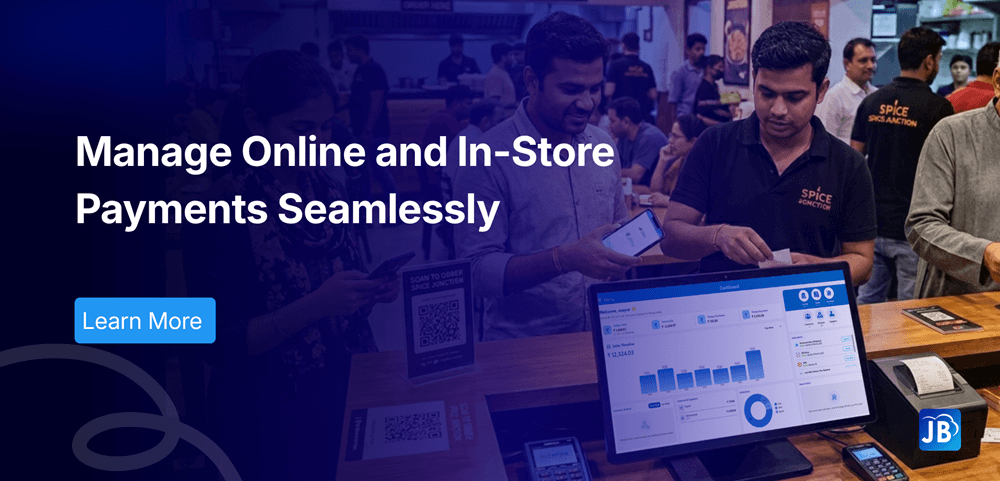
The way customers pay has changed dramatically in the last few years. A shopper might browse products on their phone, place an order online, and later walk into the store to complete a purchase. Or they may dine at a restaurant, scan a QR menu, and pay digitally without ever touching cash.
Today’s consumers no longer separate online and instore payments in their minds. To them, it’s one brand, one experience, and one expectation: fast, secure, and frictionless payments everywhere.
For retailers and restaurants, this shift has made unified POS payments a strategic necessity not just a technical upgrade.
The Industry Context: Retail & Restaurant POS Transformation
Retail and restaurant businesses are no longer purely physical. Even neighborhood stores now operate with online catalogs, WhatsApp orders, delivery integrations, and digital payment options.
Recent industry reports suggest that:
- Over 70% of customers prefer businesses offering multiple digital payment options.
- Nearly 60% of shoppers expect the same payment convenience online and offline.
- Cart abandonment rates increase when preferred payment methods are unavailable.
In this environment, businesses that treat online and in-store channels separately often struggle with reconciliation errors, delayed settlements, and inconsistent customer experiences.
This is where integrated and unified POS payment systems play a critical role.
Online vs In-Store Payments: What’s the Real Difference?
At a surface level, online payments happen through websites, apps, or delivery platforms. In-store payments occur via POS terminals, card machines, or QR codes.
But from the customer’s perspective, the difference should be invisible.
Online Payments
Customers expect:
- Instant checkout
- Multiple options (cards, UPI, wallets, Stripe, PayPal)
- Secure processing
- Immediate confirmation
If the process is slow or limited, they abandon the cart.
In-Store Payments
In physical locations, expectations are just as high:
- Tap-and-go card payments
- QR code payments
- Split bills
- Advance payment adjustments
- Quick invoice sharing (often via WhatsApp)
Speed is critical. Even a 30-second delay at checkout can impact customer satisfaction during peak hours.
The real challenge? Making both systems work together seamlessly.
Why Customers Expect Unified Payment Experiences
Customers move fluidly between channels. They might:
- Order online, pick up in-store
- Pay advance online and settle balance at counter
- Earn loyalty points online and redeem them in-store
- Request invoices digitally
If systems are disconnected, staff must manually reconcile payments, leading to errors and frustration.
A unified payment infrastructure ensures:
- Centralized transaction tracking
- Real-time financial visibility
- Accurate tax compliance
- Consistent pricing and discounts
Businesses that adopt unified POS payments often report improved operational efficiency and higher customer retention.
The Hidden Problems of Separate Payment Systems
Many businesses still operate with one system for online orders and another for in-store billing. This creates operational friction.
Common issues include:
- Manual order entry from delivery platforms
- Mismatched inventory data
- Payment reconciliation delays
- Duplicate or missing invoices
- Accounting inconsistencies
For growing businesses, these inefficiencies multiply quickly.
How Unified POS Payments Solve These Challenges
A unified POS connects online and in-store payment ecosystems into one centralized platform.
Here’s how it works in practice:
1. Single Dashboard Control
All transactions whether from a website, QR menu, Swiggy, Zomato, or counter sales—flow into one system.
With real-time Profit & Loss reporting, owners instantly see daily performance without waiting for manual accounting.
2. Smart Multi-Channel Payment Acceptance
Modern customers use:
- Credit/Debit Cards
- UPI
- Stripe
- PayPal
- QR codes
- Cash
A unified POS accepts them all while automatically updating inventory and financial reports.
3. Seamless Delivery Platform Integration
Instead of manually entering orders from Swiggy or Zomato, integrated systems sync automatically, reducing errors and saving staff time.
4. Consistent Customer Experience
Whether a customer orders via QR menu, walks into the store, or pays online, their data, loyalty points, and transaction history remain unified.
Real-World Scenario: A Restaurant Example
Imagine a quick-service restaurant during peak dinner hours.
- A customer places an order via QR menu.
- Another order through Swiggy.
- A walk-in customer pays using UPI.
- One regular customer redeems loyalty points.
Without a unified POS, staff juggle multiple screens and manually reconcile payments at closing time.
With unified POS payments:
- All transactions appear in one dashboard.
- Inventory adjusts automatically.
- Payment settlements are transparent.
- WhatsApp invoices are sent instantly.
The result? Faster service, fewer errors, happier customers.
What to Look for in a Modern Unified POS
When evaluating a payment solution, businesses should ensure it includes:
- Integrated online and in-store payment processing
- Real-time reporting and P&L tracking
- Delivery platform integration
- Multi-currency support
- Automated tax ID capture
- Advance payment management
- WhatsApp invoice sharing
- Scalable subscription plans
These features aren’t optional anymore they’re foundational.
How Just Billing Powers Unified POS Payments
Just Billing delivers an all-in-one retail and restaurant POS solution designed specifically for businesses that demand speed and accuracy.
With Smart Payments, businesses can accept:
- Cards
- Stripe
- PayPal
- In-store transactions
- QR payments
All from one centralized system.
Its seamless integration with Swiggy and Zomato eliminates manual entry. Real-time Profit & Loss reporting gives instant financial clarity. QR Menu capabilities enable contactless ordering, and WhatsApp invoices enhance customer communication.
Additionally, Just Billing supports:
- Product variants with food classification (Veg, Non-Veg, Egg)
- Advance payment tracking
- Multi-currency functionality
- Country-based Tax ID capture
- Multilingual support including Arabic
Available across Windows, Android, iOS, and centralized back office access, the platform ensures stability, speed, and global scalability.
Businesses looking to unify their online and in-store payment ecosystem can explore Just Billing
Strategic Steps to Transition to Unified POS Payments
If you’re planning to upgrade, follow this practical roadmap:
- Audit existing payment workflows (online + offline).
- Identify reconciliation bottlenecks.
- Map customer journey touchpoints.
- Choose a POS with full integration capabilities.
- Train staff on unified operations.
- Monitor performance using real-time P&L reports.
Within weeks, businesses typically notice smoother operations and improved customer satisfaction scores.
Conclusion
The debate between online and in-store payments is no longer relevant. Customers expect both to function as one unified experience.
Businesses that fail to integrate payment systems risk operational inefficiencies and lost loyalty. Those that adopt unified POS payments gain speed, clarity, and competitive advantage.
In today’s retail and restaurant environment, seamless payments are not a luxury they are the standard.
If you’re ready to modernize your payment ecosystem and deliver the experience customers expect, explore how Just Billing can help transform your business.
FAQ's:
Online payments occur through websites or apps, while in-store payments happen at physical POS terminals. Customers expect both to be seamless and equally fast.
They ensure consistent pricing, loyalty tracking, and invoice history across channels, creating a smooth omnichannel experience.
Yes. Scalable subscription plans allow small retailers and restaurants to adopt integrated payment systems without heavy investment.
It provides real-time financial reporting, automated tax ID capture, and accurate transaction tracking for easier reconciliation.
Yes. Just Billing supports Smart Payments, QR ordering, delivery integration, and in-store transactions within one unified system.
Search for article
Popular Posts
Download Our App
Share the Post
Explore our POS Software
Retail Billing Software
Super market, Grocery, Electronics, Gift Shops & Stationery
Restaurant Billing Software
Take away, Self service, Ice cream parlor, Coffee shop, Bakery
POS for Service Business
Accountant, Lawyer, Consultant, Photographer
Join Our Newsletter
Receive the latest blog posts, industry insights & exclusive Just Billing updates directly to your inbox.