

Use Case: Business Expanding to a New Country with Smart POS Technology
Expanding into a new country is an exciting milestone for any growing business. It signals demand, market confidence, and new revenue opportunities. But international expansion also introduces operational complexity. Businesses suddenly face new tax structures, local regulations, currency differences, payment preferences, and customer expectations.
Many companies discover that scaling internationally isn’t simply about opening another location, it requires adapting systems that can operate across regions without creating operational chaos.
This is where a modern POS system becomes more than a billing tool. It becomes a growth platform.
Modern businesses expanding globally increasingly rely on advanced POS solutions with country-based tax management, multi-currency support, and centralized control to reduce operational friction and maintain compliance.
Understanding the Industry Context: POS Technology for Global Business Expansion
The topic falls within the POS software and retail technology industry, where demand for internationally scalable systems continues to grow rapidly.
Industry studies estimate that over 60% of growing retail and service businesses consider international expansion as part of their five-year growth strategy. Yet operational compliance remains among the biggest obstacles.
Businesses commonly face challenges such as:
- Different tax rules in each country
- Currency conversion issues
- Diverse payment preferences
- Separate reporting requirements
- Local customer expectations
- Multi-location inventory visibility
Traditional billing software often struggles with these requirements because it was designed for a single market.
Modern global POS systems solve these challenges by creating standardized processes while adapting locally.
Why Tax Management Becomes a Major Challenge During Expansion
Every country has unique taxation rules.
A company expanding from India into the Middle East may encounter VAT requirements. Businesses moving into Europe face varying VAT rates and reporting obligations. Other regions may require GST structures or unique tax registration formats.
Many businesses initially attempt manual handling using spreadsheets or accounting adjustments. This often creates:
- Increased compliance risks
- Incorrect invoicing
- Delayed financial reporting
- Customer dissatisfaction
- Administrative burden
The challenge multiplies when multiple locations operate simultaneously.
A POS capable of country-based tax identification and automated tax assignment removes this complexity.
A Real-World Expansion Scenario
Imagine a restaurant chain that begins operations in India and later opens branches in the UAE and Singapore.
Initially, their existing software handles local billing adequately. However, as international branches launch, problems emerge.
The team experiences issues such as:
- Different tax rates for different countries
- Separate invoice formats
- Payment processing limitations
- Difficulty consolidating reports
- Currency conversion errors
Managers start spending hours manually correcting data rather than focusing on growth.
After implementing a global-ready POS system with country-specific tax settings, operations become significantly easier.
The business gains:
Faster onboarding of new locations, reduced billing errors, centralized reporting, and better compliance management.
Instead of building separate systems for every country, operations become standardized.
Why Global POS Systems Matter During International Expansion
Modern POS platforms are evolving into complete operational ecosystems.
An effective international POS solution offers far more than sales transactions.
Multi-Currency Support Improves Customer Experience
Customers prefer seeing prices and invoices in familiar currencies.
Businesses using multi-currency support create smoother experiences while simplifying accounting and financial reporting.
Country-Based Tax Capture Reduces Compliance Risk
Tax automation minimizes human error.
When POS systems automatically identify regional tax structures and apply the correct settings, businesses avoid costly compliance mistakes.
Centralized Business Visibility
Managing multiple international locations becomes difficult without unified reporting.
Business owners need real-time visibility into:
- Revenue trends
- Inventory movement
- Regional performance
- Profitability insights
- Operational efficiency
Centralized dashboards eliminate information silos.
Regional Payment Flexibility
Payment behavior differs by market.
Some regions prefer card transactions while others rely on digital wallets or online payment gateways.
Global POS systems help businesses support region-specific payment preferences.
Step-by-Step Approach to Expanding Internationally Using POS
Businesses planning international growth typically follow a structured process.
Step 1: Understand Regional Tax Requirements
Before entering a new market, identify:
- Tax registration requirements
- VAT/GST structures
- Invoice regulations
- reporting obligations
Step 2: Select Technology Designed for Expansion
Businesses often fail because they choose software intended only for local operations.
Expansion-ready platforms should support:
- Country-based tax rules
- Currency flexibility
- Payment integrations
- Global reporting
Step 3: Standardize Operations
Operational consistency improves scalability.
Create uniform workflows for:
- Billing
- inventory management
- customer programs
- financial tracking
Step 4: Centralize Performance Monitoring
A centralized back office simplifies management and improves decision-making.
Executives gain immediate visibility into expansion performance.
Best Practices Experts Recommend for Multi-Country Expansion
Businesses entering global markets benefit from planning beyond tax compliance.
Experts commonly recommend:
Focus on localization: Adapt customer experiences while keeping operational systems consistent.
Prepare scalable infrastructure: Systems should support future locations without major changes.
Automate wherever possible: Manual processes become difficult as operations grow.
Prioritize real-time visibility: Fast decisions depend on immediate access to data.
Research indicates businesses with centralized operational systems often scale faster than organizations relying on fragmented software environments.
How Just Billing Solves Global Expansion Challenges
As businesses expand internationally, they need technology designed for growth rather than systems that require constant workarounds.
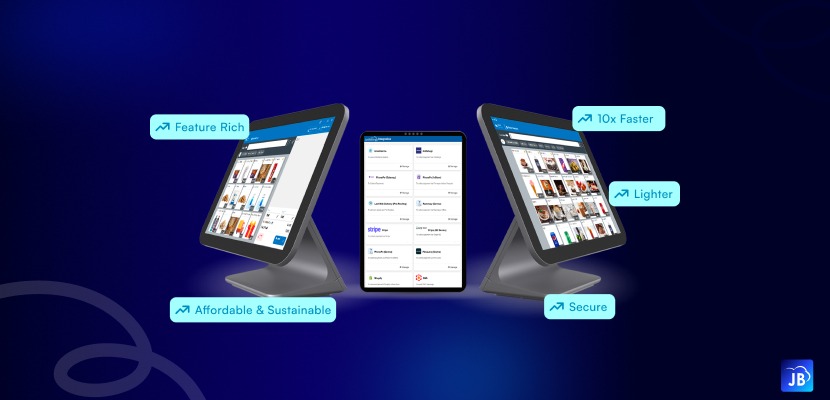
Just Billing provides advanced POS capabilities built specifically for modern retail and restaurant businesses operating across regions.
Its latest platform includes features highly relevant to international growth:
- Smart country-based Tax ID capture for regional compliance
- Multi-currency functionality for international operations
- Centralized backoffice management
- WhatsApp invoice sharing and payment reminders
- Stripe, card, PayPal, and in-store payment support
- Real-time Profit & Loss reporting
- Inventory and stock management
- Swiggy and Zomato integrations
- QR ordering capabilities
- Multilingual support including Arabic
Businesses expanding globally can maintain operational consistency while adapting to local market requirements.
Companies can also explore solutions such as Retail POS Software and Restaurant POS Software based on business type.
Future Trends in International Business Expansion Technology
Technology continues to reshape international growth.
Over the next few years, global POS platforms are expected to increasingly integrate:
- AI-powered tax recommendations
- Predictive inventory planning
- localized customer intelligence
- advanced automation
- real-time cross-border analytics
Businesses investing in scalable infrastructure today position themselves for faster growth tomorrow.
Conclusion
Entering a new country creates exciting opportunities but also introduces operational demands that cannot be managed manually.
Tax structures, currencies, customer expectations, and reporting requirements quickly become difficult to handle using disconnected systems.
A scalable POS platform acts as a central operational engine that keeps businesses compliant, efficient, and prepared for growth.
For companies planning international expansion, investing in a global-ready POS system is no longer optional, it is part of building a sustainable growth strategy.
Explore how Just Billing POS Solutions can support your next stage of global expansion.
FAQ's:
Different countries have different tax structures. Automated tax handling reduces compliance risks and billing errors.
It automatically applies local tax rules and collects required information, improving billing accuracy.
Businesses should prioritize country-wise sales reports, profit analysis, inventory visibility, and centralized dashboards.
Yes. Just Billing supports multi-currency operations, tax capture, centralized reporting, and multilingual functionality.
Centralized visibility helps leadership monitor operations, maintain consistency, and make faster business decisions.

Search for article
Popular Posts
Download Our App
Share the Post
Explore our POS Software
Retail Billing Software
Super market, Grocery, Electronics, Gift Shops & Stationery
Restaurant Billing Software
Take away, Self service, Ice cream parlor, Coffee shop, Bakery
POS for Service Business
Accountant, Lawyer, Consultant, Photographer
Join Our Newsletter
Receive the latest blog posts, industry insights & exclusive Just Billing updates directly to your inbox.