
How Platform Flexibility Improves Business Control
Running a business today no longer happens from behind a single cash counter. Owners move between stores, managers work remotely, customers buy through multiple channels, and teams operate across devices. In this environment, control no longer comes from being physically present, it comes from having a flexible system that keeps every part of the business connected.
This is where a platform flexible POS becomes a major advantage.
Traditional point-of-sale systems were often tied to one machine, one location, and one workflow. Modern businesses need much more. Whether you operate a restaurant, retail chain, supermarket, café, or service business, flexibility determines how efficiently you manage growth.
Studies suggest businesses using cloud-connected operational systems can reduce process delays by nearly 30–40% and improve decision-making speed significantly. Businesses increasingly seek systems that provide visibility beyond the billing counter.
For growing companies, flexibility directly impacts control.
Understanding Platform Flexibility in the POS Industry
The industry detected here is POS software and business operations technology, where adaptability has become a defining requirement rather than an optional feature.
Platform flexibility means a POS solution can operate seamlessly across:
- Windows devices
- Android systems
- iOS platforms
- Mobile devices
- Tablets
- Centralized cloud backoffices
- Multiple business locations
Instead of restricting operations to a single device, businesses can manage and monitor everything through one connected ecosystem.
Imagine a restaurant owner reviewing live orders from home while the cashier works at the outlet and inventory updates automatically in the back office. That level of operational synchronization changes how businesses function.
The goal is simple: more flexibility creates stronger business control.
Why Business Control Depends on Flexibility
Control in business is often misunderstood. Many assume control simply means access to reports or inventory data.
True business control includes:
- Real-time operational visibility
- Faster decision-making
- Centralized reporting
- Multi-location management
- Better employee oversight
- Customer experience consistency
Without flexibility, information becomes delayed. Delayed information usually creates delayed decisions.
Imagine a restaurant owner managing three locations. If sales reports only become available after closing time, immediate operational adjustments become impossible.
A business control POS system removes those delays and provides live business insights.
How Platform Flexibility Directly Improves Business Control
Access Your Business From Anywhere
One of the biggest advantages of flexibility is mobility.
Managers no longer need to remain inside the store to understand performance.
With a connected POS system, business owners can:
- Check sales performance
- Monitor staff activity
- Track inventory movement
- Review financial reports
- View customer transactions
All from smartphones or cloud dashboards.
Control becomes available wherever decisions happen.
Real-Time Visibility Creates Faster Decisions
Traditional systems often rely on end-of-day summaries.
Flexible platforms work differently.
Data updates continuously.
When a fast-selling item begins running low, managers receive visibility immediately. When sales suddenly increase, teams can react faster.
Real-time visibility supports:
- Better purchasing decisions
- Faster operational adjustments
- Reduced stockouts
- Improved customer experience
Businesses that see issues early often solve them before customers notice.
Multi-Device Operations Increase Productivity
Modern workplaces use different devices for different responsibilities.
For example:
A restaurant may use:
- Tablet ordering for waitstaff
- Kitchen screens for food preparation
- Mobile devices for managers
- Counter POS terminals for payments
Retail stores may use handheld inventory scanners while owners monitor performance remotely.
A platform flexible POS adapts naturally to these workflows instead of forcing teams into rigid systems.
Real-World Example: Multi-Location Restaurant Chain
Consider a restaurant brand operating across multiple cities.
The owner travels regularly and cannot remain physically present in every location.
Without a platform-flexible system:
Managers email reports manually.
Inventory updates arrive late.
Customer feedback remains disconnected.
Performance visibility becomes fragmented.
After implementing a platform flexible POS, the business can:
- Monitor all branches from one interface
- Track inventory instantly
- review Profit & Loss data
- monitor online delivery activity
- manage customer interactions centrally
Operational control improves without increasing management complexity.
Why Modern Businesses Prefer Flexible POS Systems
Businesses today rarely operate through a single channel.
Many manage:
- Physical stores
- Online orders
- Delivery services
- Customer loyalty programs
- Payment platforms
- Marketing channels
A rigid system creates isolated workflows.
A flexible platform creates connected workflows.
Businesses increasingly seek solutions that support future expansion rather than requiring replacement later.
Expert Considerations Before Choosing a Flexible POS Platform
Not all systems provide meaningful flexibility.
Before selecting a solution, evaluate:
Multi-Platform Availability
Can employees use:
- Windows
- Android
- iOS
- Mobile applications
A truly flexible system should work naturally across environments.
Integration Ecosystem
Modern businesses rely heavily on integrations.
Look for compatibility with:
- payment gateways
- delivery apps
- accounting tools
- CRM systems
- messaging channels
Real-Time Reporting
Control improves significantly when reporting happens instantly.
Delayed reporting often limits responsiveness.
Scalability
Your POS should support future expansion without requiring infrastructure changes.
How Just Billing Solves Platform Flexibility Challenges
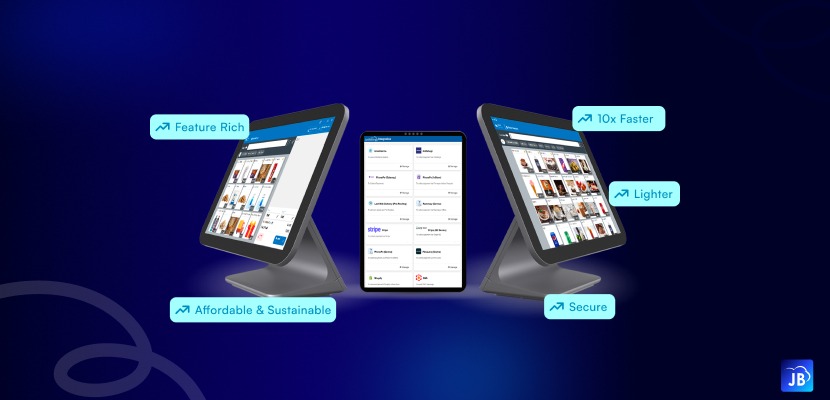
Just Billing offers a modern POS ecosystem designed specifically for businesses that require speed, mobility, and operational control. The platform works across Windows, Android, iOS devices, and centralized cloud backoffices, giving businesses access from virtually anywhere.
Instead of acting as only a billing solution, Just Billing combines multiple operational tools within one system.
Key capabilities include:
- Smart payment support including cards, digital payments, Stripe, PayPal, and in-store transactions
- Real-time Profit & Loss visibility
- Multi-currency support
- Inventory and stock management
- WhatsApp invoices and reminders
- QR Menu ordering systems
- Delivery integration with Swiggy and Zomato
- Customer loyalty and management tools
- Multi-language support including Arabic
- Flexible subscription plans for growing businesses
The platform is designed to give businesses stronger control while maintaining flexibility as operations evolve.
Businesses looking for insights can also explore the Just Billing Blog for operational trends and POS best practices.
Conclusion
Business control is no longer tied to sitting behind a desk or staying inside a physical store.
Modern businesses require flexibility because operations happen across locations, devices, and customer channels.
A platform flexible POS helps owners remain connected, responsive, and informed at every stage of growth.
Businesses that adopt flexible technology often gain more than convenience, they gain visibility, operational efficiency, and stronger decision-making capabilities.
To see how a modern platform can simplify control and support growth, visit Just Billing
FAQ's:
A platform flexible POS system works across multiple devices and operating systems, allowing businesses to manage operations from anywhere.
It provides real-time visibility, centralized reporting, and access across devices, helping businesses make faster decisions.
Yes. Modern POS platforms allow managers and owners to access reports, sales, and inventory through mobile applications.
Yes. Just Billing supports Windows, Android, iOS, and centralized back-office operations.
Yes. Flexible systems scale with business growth and simplify expansion across locations and channels.

Search for article
Popular Posts
Download Our App
Share the Post
Explore our POS Software
Retail Billing Software
Super market, Grocery, Electronics, Gift Shops & Stationery
Restaurant Billing Software
Take away, Self service, Ice cream parlor, Coffee shop, Bakery
POS for Service Business
Accountant, Lawyer, Consultant, Photographer
Join Our Newsletter
Receive the latest blog posts, industry insights & exclusive Just Billing updates directly to your inbox.