

Why Modern Businesses Need Multiple Payment Options in One POS
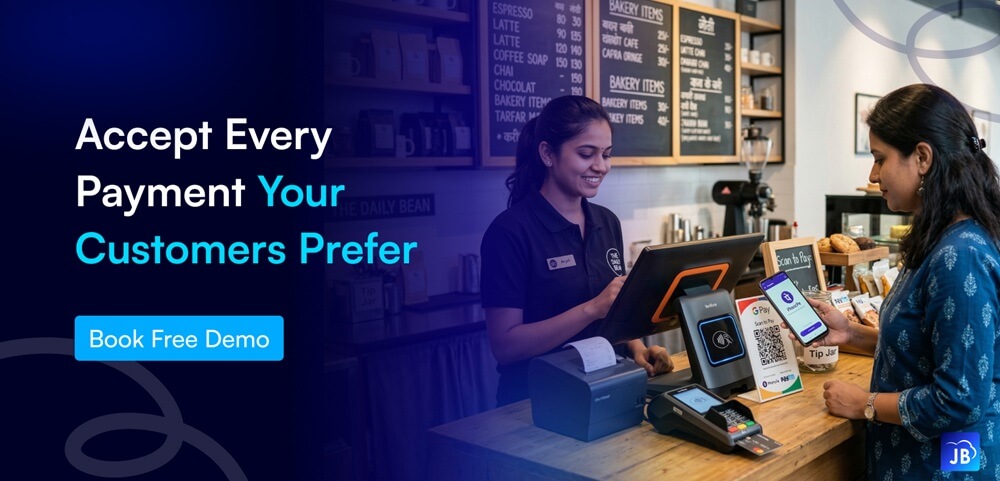
Walk into any modern store or restaurant today, and you’ll see customers paying in different ways using credit cards, UPI, QR codes, digital wallets, contactless taps, online gateways, and even advance payments. The buying experience has evolved rapidly. What hasn’t evolved in many businesses is their payment infrastructure.
A multiple payment option POS is no longer a luxury feature. It is a core requirement for growth. Businesses that still rely on limited payment methods often experience checkout delays, abandoned purchases, and lost revenue.
In this article, we explore why a modern POS payment system must support multiple payment methods, how it directly impacts revenue and customer satisfaction, and how Just Billing helps businesses streamline payments without complexity.
Industry Context: Retail & Restaurant POS Evolution
The retail and restaurant industry has undergone a major digital transformation in the past decade. With the rise of digital wallets, UPI, contactless payments, and global eCommerce, customers now expect frictionless checkout everywhere.
According to industry reports, over 70% of urban consumers prefer digital payments over cash. Contactless payments have grown significantly year over year, while cross-border commerce has expanded with multi-currency demand.
For retail stores, restaurants, supermarkets, distributors, and service businesses, this means one thing: your POS payment system must adapt to customer preferences instantly. If your system cannot accept the payment method your customer prefers, you risk losing the sale in seconds.
What Does “Multiple Payment Options in One POS” Really Mean?
A modern multiple payment options POS allows businesses to accept various payment modes within a single integrated system. Instead of managing separate devices or platforms, everything runs seamlessly through one unified dashboard.
This typically includes:
- Credit and debit cards
- UPI and QR code payments
- Digital wallets
- Online gateways like Stripe and PayPal
- Cash
- Advance payments and partial payments
- Multi-currency transactions
The key is integration. Payments should reflect instantly in reports, stock updates, and accounting dashboards, without manual reconciliation.
Why Limiting Payment Methods Hurts Business Growth
When businesses restrict payment choices, the impact is immediate and measurable.
First, checkout friction increases. If customers must switch apps or visit an ATM because their preferred method isn’t available, they may abandon the purchase.
Second, manual reconciliation errors rise. Using disconnected payment tools often leads to mismatched sales reports, incorrect P&L calculations, and time-consuming bookkeeping.
Third, customer satisfaction drops. In competitive markets, convenience often determines loyalty.
Modern customers value speed. A delay of even 20–30 seconds at checkout can affect perceived service quality.
Key Benefits of a Multiple Payment Options POS
- Higher conversion rates
When customers can pay using their preferred method, purchase completion rates increase. Studies suggest businesses offering diverse payment methods see up to 20–30% higher conversion compared to those with limited options.
2. Faster Checkout Experience
Integrated digital payment solutions reduce queue time. Contactless and QR payments process faster than traditional methods, especially during peak hours in restaurants and retail stores.
3. Better Financial Visibility
A unified POS payment system records all transactions in real time. This allows business owners to monitor daily revenue, tax collection, and profitability without manual adjustments.
4. Improved Customer Trust
Accepting secure payment gateways like Stripe and PayPal enhances brand credibility, especially for businesses operating online and offline.
5. Global Business Readiness
Multi-currency support enables businesses to serve international customers and expand beyond local markets.
Step-by-Step: How to Implement a Unified Payment POS
Transitioning to a modern POS payment system doesn’t need to be complicated.
First, audit your current payment flow. Identify which methods customers frequently request but you do not support.
Second, choose a POS platform that integrates all payment modes natively rather than through third-party workarounds.
Third, ensure real-time reporting integration. Payment data should automatically reflect in your Profit & Loss dashboard.
Fourth, train staff to handle multiple payment modes confidently to avoid checkout confusion.
Finally, monitor performance. Track metrics like checkout time, payment distribution, and refund processing efficiency.
Real-World Example: Retail & Restaurant Scenario
Imagine a busy restaurant during dinner hours. Some customers prefer UPI, others tap their card, while a few split the bill between cash and digital wallets. Without an integrated system, staff struggle to manage multiple devices and reconcile payments later.
With a unified multiple payment options POS, the cashier processes all modes within one screen. The system automatically updates stock, captures tax data, and reflects sales in real-time reports.
This not only improves speed but also reduces end-of-day accounting stress.
Expert Considerations Before Choosing a POS Payment System
When evaluating a POS solution, business owners should consider:
- Does it support online and in-store payments seamlessly?
- Can it handle advance payments and partial settlements?
- Is multi-currency available for global operations?
- Does it integrate with delivery platforms and accounting modules?
- Are transaction records easily accessible for audits and compliance?
Security is equally important. Look for encrypted payment processing and compliance-ready features.
How Just Billing Solves the Modern Payment Challenge
Just Billing is designed for businesses that demand flexibility and control.
With Smart Payments integration, Just Billing supports cards, Stripe, PayPal, in-store transactions, and digital payment methods within one unified interface. Businesses no longer need separate systems for online and offline payments.
The software also offers:
- Real-time Profit & Loss reporting for instant financial visibility
- Advance payment tracking and automated reminders
- WhatsApp invoice sharing for faster collection
- Multi-currency support for global operations
- Seamless integration with Swiggy and Zomato for delivery management
- Flexible subscription plans (GO, PRO, MAX)
Whether you operate a retail store, restaurant, or distribution business, Just Billing ensures your payment infrastructure scales with your growth.
Why This Matters More in 2026 and Beyond
The shift toward unified commerce is accelerating. Customers expect omnichannel experiences,browse online, buy in-store, pay digitally, and receive instant receipts.
A fragmented POS payment system cannot support this model efficiently. Businesses that invest in integrated, multi-mode payment systems position themselves for sustainable growth.
Payment flexibility is no longer about convenience,it’s about competitiveness.
Conclusion
Modern businesses cannot afford payment limitations. A multiple payment option POS improves conversion rates, reduces checkout friction, enhances customer trust, and simplifies financial management.
As digital payment adoption continues to rise, adopting a unified POS payment system becomes a strategic decision, not just an operational upgrade.
If you want to increase revenue, improve operational control, and deliver a seamless checkout experience, it’s time to upgrade your POS.
FAQ's:
A multiple payment options POS is a POS payment system that allows businesses to accept cards, UPI, wallets, online gateways, cash, and other digital payment methods within one integrated platform.
They reduce checkout friction, increase conversion rates, and improve customer satisfaction by offering preferred payment methods.
Yes, modern POS systems integrate in-store transactions with online gateways like Stripe and PayPal for unified reporting.
All transactions are automatically recorded in real-time, reducing reconciliation errors and simplifying tax and P&L reporting.
Look for integrated payment support, real-time reporting, security compliance, delivery platform integrations, and scalability.
Search for article
Popular Posts

Download Our App
Share the Post
Explore our POS Software
Retail Billing Software
Super market, Grocery, Electronics, Gift Shops & Stationery
Restaurant Billing Software
Take away, Self service, Ice cream parlor, Coffee shop, Bakery
POS for Service Business
Accountant, Lawyer, Consultant, Photographer
Join Our Newsletter
Receive the latest blog posts, industry insights & exclusive Just Billing updates directly to your inbox.