

QR Menu vs Traditional Ordering: Which Is Better for Restaurants?
Restaurants are evolving faster than ever. Rising customer expectations, staff shortages, and the demand for faster service are pushing restaurants to rethink how orders are taken. What used to be a simple waiter-and-notepad system is now being replaced with digital tools designed to improve speed, accuracy, and customer convenience.
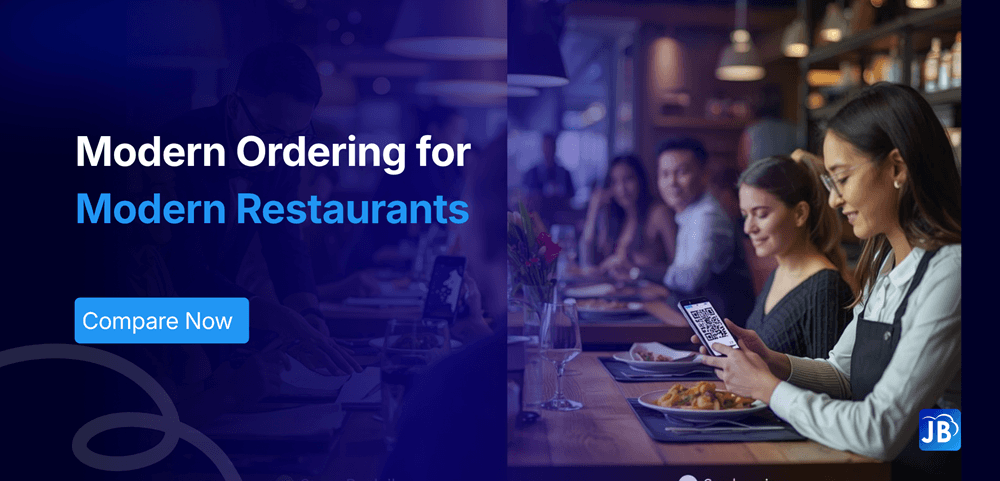
One of the biggest shifts in restaurant technology is the adoption of QR menus. Many restaurants now allow customers to scan a QR code on the table, browse the menu on their phones, and place orders instantly. But traditional ordering, where servers take orders manually, still remains common in many establishments.
So the key question for restaurant owners becomes clear: QR menu vs traditional ordering — which restaurant ordering system works better?
The answer depends on multiple factors including efficiency, order accuracy, customer experience, and operational costs. Understanding these differences helps restaurants choose the right technology for long-term growth.
The Restaurant Technology Shift: From Manual Service to Smart Ordering
The restaurant industry has always adapted to changing customer expectations. Over the last few years, digital transformation has accelerated significantly.
Industry reports suggest that over 60% of diners now prefer digital or contactless menus, especially after the global shift toward safer dining practices.
Several factors are driving this change:
- Increased smartphone usage among customers
- Demand for faster service
- Need for improved order accuracy
- Pressure on restaurants to optimize staff efficiency
Restaurants are now adopting tools like QR code menu ordering, POS integrations, and automated kitchen systems to streamline operations.
Modern platforms such as Just Billing’s restaurant POS system enable restaurants to combine digital ordering, payments, inventory management, and delivery integrations into one unified platform.
The result is a smarter, faster, and more scalable restaurant environment.
What Is Traditional Restaurant Ordering?
Traditional ordering is the classic method used by restaurants for decades.
A customer reviews a physical menu, places an order with a waiter, and the waiter communicates the order to the kitchen.
While simple, this system relies heavily on staff coordination.
The process typically looks like this:
- Customers receive printed menus
- Waiter takes orders manually
- Orders are entered into POS or written for the kitchen
- Kitchen prepares the order
- Waiter delivers food
This approach offers a personal and hospitality-driven dining experience, which is why many restaurants still use it.
However, traditional ordering also presents several operational challenges.
Common issues include:
- Order errors due to handwriting or miscommunication
- Delays during busy hours
- Increased labor dependency
- Slower table turnover
For small restaurants or cafes with low traffic, traditional ordering may still work efficiently. But as restaurants grow, these inefficiencies become more noticeable.
What Is QR Menu Ordering?
QR menu ordering is a contactless digital ordering system that allows customers to access menus directly from their smartphones.
A QR code placed on the table or menu stand connects diners to an online menu.
Customers can browse dishes, customize items, and sometimes even place orders directly without waiting for staff.
A typical QR menu ordering process looks like this:
- Customer scans QR code with smartphone
- Digital menu opens instantly
- Customer browses dishes and customization options
- Order is placed digitally
- Kitchen receives the order automatically
This system significantly improves operational speed and reduces human error.
Advanced solutions like the QR Menu platform from Just Billing also integrate directly with POS billing systems, enabling restaurants to manage orders, payments, and kitchen workflows from a single interface.
QR Menu vs Traditional Ordering: Key Differences
When comparing QR menu vs traditional ordering, the differences become clear across several operational areas.
Speed of Service
Traditional ordering often requires customers to wait for a waiter to arrive, take the order, and enter it into the system.
QR menu ordering removes this waiting period. Customers can order instantly after scanning the code.
In high-traffic restaurants, this can reduce service delays by 30–40%.
Order Accuracy
Manual order-taking increases the chance of errors.
Common mistakes include:
- Incorrect dish entries
- Missing modifiers
- Misheard instructions
Digital menus reduce these issues because orders go directly into the POS system.
A restaurant POS ordering system like Just Billing ensures that every order reaches the kitchen exactly as entered.
Customer Experience
Traditional ordering offers personalized interaction, which many diners enjoy.
However, younger customers often prefer speed and convenience over conversation.
QR menu ordering gives customers:
- Full control of their ordering process
- More time to explore menu items
- Faster service without waiting
Restaurants can still combine QR ordering with staff assistance for the best of both worlds.
Operational Efficiency
Restaurants that rely purely on traditional ordering require more staff during peak hours.
QR ordering systems reduce staff workload by automating parts of the service process.
This allows restaurants to:
- Handle more customers
- Reduce operational costs
- Improve service consistency
Real-World Example: A Busy Casual Dining Restaurant
Imagine a casual dining restaurant with 25 tables during dinner service.
With traditional ordering, servers must move between tables taking orders, often leading to delays when the restaurant gets busy.
But with QR menu ordering:
Customers scan the QR code immediately after sitting. Within minutes, orders are sent directly to the kitchen.
The kitchen receives orders faster, staff workload is reduced, and tables turn over quicker.
Many restaurants report up to 20% higher table turnover after adopting digital ordering.
Best Practices for Implementing QR Menu Ordering
Introducing QR menu ordering requires thoughtful implementation.
Restaurants should ensure the system enhances customer experience rather than replacing hospitality.
Best practices include:
Keep menus visually appealing and easy to navigate.
Digital menus should include clear categories, high-quality images, and descriptions.
Provide hybrid ordering options.
Not all customers prefer digital ordering. Staff should remain available to assist.
Integrate the QR menu with POS systems.
A unified system ensures orders move directly from the customer to the kitchen.
Optimize menus for mobile viewing.
Since most customers will access the menu on smartphones, responsive design is essential.
Platforms like Just Billing simplify this process by integrating QR menus, POS billing, payments, and delivery management into one system.
How Just Billing Improves Restaurant Ordering Systems
Modern restaurants need more than just billing software. They require a comprehensive operational platform.
Just Billing offers an all-in-one solution designed specifically for restaurants and retail businesses.
Its platform enables restaurants to modernize ordering while maintaining full operational control.
Key capabilities include:
- QR menu platform for contactless ordering
- Smart payments supporting cards, Stripe, PayPal, and in-store transactions
- Real-time Profit & Loss insights
- Integration with Swiggy and Zomato for delivery management
- WhatsApp invoices and payment reminders
- Inventory and stock management
- Multi-currency and tax compliance features
Restaurants can manage dine-in, takeaway, and online delivery orders from a single interface.
Businesses interested in upgrading their restaurant ordering system can explore the platform at:
The Future of Restaurant Ordering Systems
Restaurant technology is moving toward fully integrated digital ecosystems.
Industry analysts estimate that over 70% of restaurants will adopt some form of digital ordering system by 2030.
Future restaurant ordering systems will likely include:
- AI-driven recommendations
- voice ordering
- smart kitchen automation
- integrated loyalty programs
- personalized customer experiences
QR menus are only the beginning of a broader transformation in restaurant operations.
Conclusion
The debate between QR menu vs traditional ordering ultimately depends on a restaurant’s goals and customer preferences.
Traditional ordering offers personal service and familiarity, but it can introduce delays and errors during busy periods.
QR menu ordering provides speed, accuracy, and operational efficiency, making it an attractive solution for modern restaurants.
Many successful restaurants now use a hybrid approach, combining digital ordering with attentive staff service.
Solutions like Just Billing make this transition easier by integrating QR menus, POS billing, payments, and delivery systems into one seamless platform.
Restaurants looking to modernize operations and improve customer experience.
FAQ's:
A QR menu allows customers to scan a QR code using their smartphone to view the restaurant’s digital menu and place orders directly.
Yes. QR ordering reduces the time servers spend taking orders, allowing them to focus on customer service and hospitality.
Modern POS platforms integrate QR menus directly with kitchen displays, billing systems, and payment gateways.
Advanced restaurant POS systems can integrate QR ordering with delivery services like Swiggy and Zomato.
Restaurants can implement QR menus using integrated POS platforms like Just Billing that combine ordering, billing, payments, and delivery management.

Search for article
Popular Posts
Download Our App
Share the Post
Explore our POS Software
Retail Billing Software
Super market, Grocery, Electronics, Gift Shops & Stationery
Restaurant Billing Software
Take away, Self service, Ice cream parlor, Coffee shop, Bakery
POS for Service Business
Accountant, Lawyer, Consultant, Photographer
Join Our Newsletter
Receive the latest blog posts, industry insights & exclusive Just Billing updates directly to your inbox.