

Top 7 Problems in Manual Billing And How to Fix Them
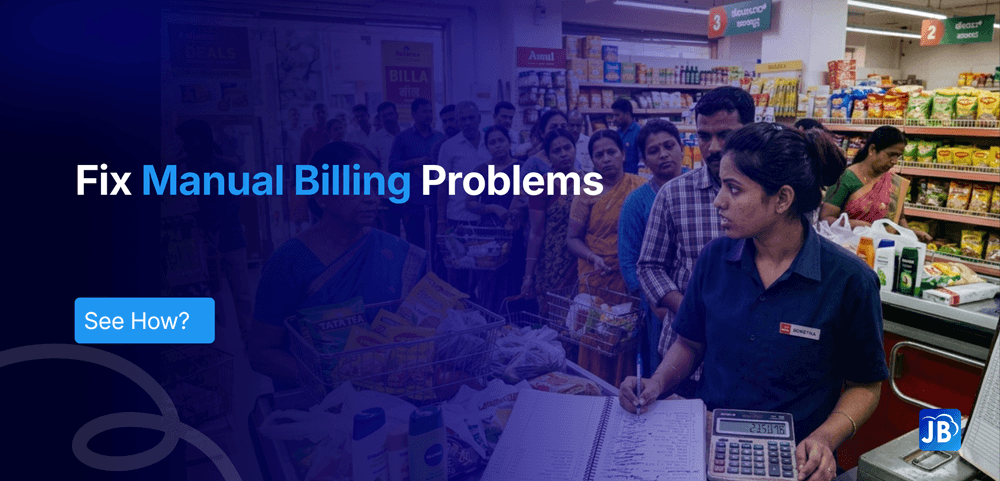
Billing is the final step in any transaction, but it’s often where businesses lose time, accuracy, and even customer trust. Many small and mid-sized retailers and restaurants still rely on manual billing methods using paper invoices, spreadsheets, or basic calculators. While this approach may seem manageable initially, it quickly becomes a bottleneck as operations scale.
In fact, studies suggest that manual data entry processes can lead to error rates of up to 4%, which directly impacts revenue and customer satisfaction. In a competitive market where speed and precision matter, manual billing is no longer sustainable.
This article breaks down the top 7 problems in manual billing and shows practical ways to fix them using modern pos solutions.
Industry Context: Why Billing Systems Matter More Than Ever
In the retail and restaurant POS software industry, speed and accuracy are no longer optional they are expected. Customers demand quick service, digital payments, and error-free transactions.
With the rise of online ordering platforms, multi-location businesses, and digital payments, relying on manual billing today is like trying to run a modern store with outdated tools. Businesses that fail to upgrade often struggle with scaling operations and maintaining consistency.
What is Manual Billing?
Manual billing refers to the process of creating invoices, calculating totals, and recording transactions without automated systems. This often includes handwritten bills or basic spreadsheet usage.
While it may work for very small operations, it introduces inefficiencies that grow exponentially with business expansion.
Top 7 Problems in Manual Billing
1. Frequent Calculation Errors
Human errors in calculations are inevitable. A small mistake in totals, taxes, or discounts can result in financial losses or unhappy customers.
The solution lies in automated billing systems that instantly calculate totals, apply taxes, and ensure accuracy without manual intervention.
2. Slow Billing Process
Manual billing takes time writing item details, calculating totals, and preparing invoices slows down operations, especially during peak hours.
Switching to a POS system enables faster checkout, reducing queues and improving customer experience.
3. Poor Inventory Tracking
Manual billing doesn’t update stock levels in real time. This often leads to stock mismatches, over-selling, or missed sales opportunities.
A POS system integrates inventory tracking with billing, ensuring every sale updates stock automatically.
4. Lack of Sales Insights
With manual records, analyzing sales trends becomes difficult. Businesses miss out on understanding best-selling products, peak hours, and customer preferences.
Digital billing solutions provide real-time reports, helping owners make informed decisions.
5. Difficulty in Managing Multiple Payment Modes
Today’s customers expect flexible payment options like cards, UPI, wallets, and online payments. Manual systems struggle to handle this complexity.
Modern billing software supports multiple payment gateways, simplifying transactions and improving customer convenience.
6. No Customer Data Management
Manual billing doesn’t store customer information, making it impossible to run loyalty programs or personalized marketing campaigns.
POS systems capture customer data, enabling businesses to build relationships and improve retention.
7. Compliance and Tax Errors
Tax calculations and compliance requirements can be complex. Manual billing increases the risk of incorrect tax entries and regulatory issues.
Automated systems ensure accurate tax calculations and proper record-keeping, reducing compliance risks.
Why Fixing Manual Billing is Critical for Growth
Businesses that continue relying on manual billing often face hidden costs, lost revenue, inefficient operations, and poor customer experiences.
By adopting digital billing solutions, businesses can:
Improve billing accuracy
Speed up operations
Enhance customer satisfaction
Gain real-time business insights
Scale without operational chaos
Real-World Example: Retail Store Billing Improvement
A busy supermarket using manual billing faced frequent pricing errors, long queues, and stock mismatches as customer volume grew.
After switching to Just Billing:
- Billing errors were eliminated with automated calculations
- Checkout became faster, reducing wait times
- Inventory updated in real time, avoiding stock issues
The result was smoother operations and improved customer satisfaction.
Expert Insights: What Growing Businesses Should Focus On
Modern businesses should treat billing as a strategic function rather than a basic task. Efficient billing systems contribute directly to profitability, customer experience, and scalability.
Key considerations include:
- Real-time reporting for quick decisions
- Seamless integrations with payment and delivery platforms
- Scalability for multi-location operations
- Data-driven insights for growth
How Just Billing Solves Manual Billing Problems
This is where Just Billing stands out as a complete solution for modern businesses.
With advanced POS capabilities, Just Billing eliminates manual inefficiencies and replaces them with smart automation:
- Smart Payments supporting cards, Stripe, PayPal, and in-store transactions
- Real-time Profit & Loss reporting for instant financial insights
- Integration with Swiggy and Zomato for unified order management
- QR Menu for contactless ordering
- WhatsApp invoicing and automated payment reminders
- Multi-currency support for global operations
- Advanced inventory and stock management
- Customer loyalty programs and CRM tools
Whether you run a retail store, restaurant, or distribution business, Just Billing helps you operate faster, smarter, and more efficiently.
Conclusion
Manual billing may seem simple, but it creates hidden inefficiencies that slow down growth and impact customer satisfaction. From calculation errors to poor inventory management, the problems compound as your business expands.
The solution lies in adopting modern POS software like Just Billing that automates processes, improves accuracy, and delivers real-time insights.
Businesses that embrace digital billing not only save time but also gain a competitive edge in today’s fast-paced market.
FAQ's:
Manual billing commonly leads to calculation errors, slow checkout, poor inventory tracking, and lack of business insights.
POS systems automate calculations, apply taxes correctly, and eliminate human errors, ensuring accurate billing every time.
It speeds up checkout, reduces errors, and enables digital receipts and multiple payment options.
Yes, it automatically calculates taxes and supports compliance with local regulations.
Just Billing offers an all-in-one platform with advanced features, integrations, and scalability tailored for retail and restaurant businesses.

Search for article
Popular Posts
Download Our App
Share the Post
Explore our POS Software
Retail Billing Software
Super market, Grocery, Electronics, Gift Shops & Stationery
Restaurant Billing Software
Take away, Self service, Ice cream parlor, Coffee shop, Bakery
POS for Service Business
Accountant, Lawyer, Consultant, Photographer
Join Our Newsletter
Receive the latest blog posts, industry insights & exclusive Just Billing updates directly to your inbox.