
Common Challenges in Managing Online and Offline Sales & How Integration Solves Them
Running a business today means being present everywhere your customers are both online and offline. A customer might browse your products on your website, place an order through a delivery platform, and still visit your physical store the next day. While this creates opportunities for growth, it also introduces operational complexity that many businesses struggle to manage efficiently.
From mismatched inventory to inconsistent pricing and delayed reporting, managing disconnected sales channels can quickly become overwhelming. This is where integration, especially through a powerful POS system, becomes not just helpful but essential.
Industry Context: The Rise of Omnichannel Commerce
The retail and restaurant industry has shifted rapidly toward omnichannel commerce. According to recent industry estimates, over 70% of customers expect a seamless experience whether they shop online or visit a store.
However, most small and mid-sized businesses struggle to deliver this experience because their systems are disconnected.
Without a unified system:
- Online orders don’t sync with store inventory
- Sales reports are scattered
- Customer data remains incomplete
This disconnect directly impacts revenue, efficiency, and customer satisfaction.
Understanding the Core Problem
Managing online and offline sales separately creates data silos. Each platform operates independently, forcing business owners to manually reconcile information.
This leads to:
- Increased operational workload
- Higher chances of human error
- Lack of real-time visibility
Over time, these inefficiencies slow down growth and make scaling nearly impossible.
Key Challenges in Managing Online and Offline Sales
1. Inventory Mismatches and Stock Issues
One of the most common problems is inventory inconsistency. A product might show as “available” online but be out of stock in-store.
This happens because systems are not synced in real time. Staff often rely on manual updates, which increases the risk of errors.
Over time, this results in:
- Overselling or stockouts
- Poor customer experience
- Revenue loss
2. Inconsistent Pricing and Promotions
Managing pricing across platforms can quickly become chaotic. Discounts applied online may not reflect at the billing counter, leading to confusion and customer dissatisfaction.
Without centralized control, businesses struggle to maintain pricing consistency across:
- Ecommerce platforms
- In-store POS systems
- Third-party delivery apps
3. Fragmented Customer Data
Customer data is valuable but only when it’s unified. When systems are disconnected, purchase history, preferences, and contact details are scattered across platforms.
This makes it difficult to:
- Personalize offers
- Run loyalty programs
- Send targeted promotions
4. Manual Reporting and Lack of Insights
Businesses often spend hours compiling reports from different systems. Sales data from POS, online orders, and payment gateways must be manually consolidated.
This leads to delayed insights and poor decision-making. Real-time performance tracking becomes nearly impossible.
5. Operational Inefficiencies
Without integration, staff must switch between multiple tools to manage orders, inventory, and payments. This increases workload and slows down operations.
In busy environments like restaurants or retail stores, even small delays can impact customer experience.
6. Payment Reconciliation Challenges
Handling multiple payment methods like cards, wallets, online gateways, and cash becomes complicated when systems are not connected.
Reconciling transactions manually increases the risk of discrepancies and accounting errors.
Why Integration is No Longer Optional
Integration is not just a technical upgrade, it’s a business necessity.
When your POS system connects all sales channels, it creates a single source of truth. This eliminates guesswork and ensures every part of your business operates in sync.
Businesses that adopt integrated systems often report:
- Up to 40% reduction in manual work
- Improved order accuracy
- Faster decision-making due to real-time insights
How POS Integration Solves These Challenges
Unified Inventory Management
An integrated POS system automatically updates inventory across all channels in real time. Whether a sale happens online or offline, stock levels remain accurate.
This prevents overselling and reduces stockouts.
Centralized Dashboard for Sales
Instead of juggling multiple reports, businesses get a single dashboard showing complete sales data. This enables better tracking of performance and trends.
Streamlined Order Processing
Orders from different platforms flow into one system. This simplifies fulfillment and reduces operational errors.
Consistent Customer Experience
With unified data, businesses can maintain consistent pricing, offers, and service across all channels.
Simplified Financial Management
Integration ensures all transactions are recorded in one place, making accounting and compliance much easier.
Real-World Example
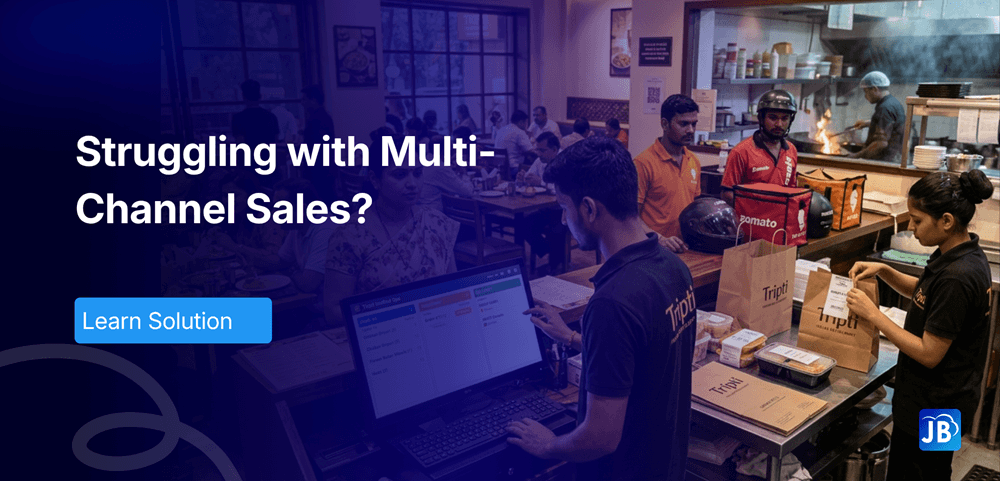
Consider a mid-sized restaurant managing dine-in, takeaway, and online delivery. Without integration, staff manually track orders from multiple platforms, leading to delays and errors.
After implementing an integrated POS system:
- Order processing time reduced significantly
- Inventory tracking became accurate
- Customer satisfaction improved due to faster service
This transformation directly impacts revenue and operational efficiency.
Expert Insights: Best Practices for Seamless Integration
To successfully integrate online and offline sales, businesses should focus on a few key strategies.
Start by choosing a scalable system that supports multiple integrations. Ensure that your POS software connects with ecommerce platforms, payment gateways, and delivery apps.
Prioritize real-time synchronization to avoid data inconsistencies. Additionally, invest in staff training to ensure smooth adoption of new systems.
Finally, regularly analyze performance data to identify areas for improvement.
How Just Billing Solves These Challenges
For businesses looking to simplify operations and scale efficiently, Just Billing provides a complete solution.
With its advanced POS platform, businesses can unify online and offline sales effortlessly. The system supports real-time inventory updates, ensuring accurate stock levels across all channels.
Its Smart Payments feature integrates multiple payment methods including cards, Stripe, PayPal, and in-store transactions, eliminating reconciliation headaches.
The platform also connects seamlessly with delivery services like Swiggy and Zomato, making it ideal for restaurants and food businesses.
With built-in Profit & Loss reporting, business owners gain instant financial insights without manual effort. Features like WhatsApp invoicing, automated reminders, and multi-currency support further enhance operational efficiency.
Whether you run a retail store, restaurant, or service business, Just Billing acts as a centralized hub that keeps everything connected and under control.
Conclusion
Managing online and offline sales doesn’t have to be complicated. The real challenge lies not in handling multiple channels, but in managing them without integration.
By adopting a unified POS system, businesses can eliminate inefficiencies, improve customer experience, and unlock new growth opportunities.
In a competitive market, the ability to operate seamlessly across channels is no longer an advantage, it’s a necessity.
FAQ's:
The most common challenges include inventory mismatch, disconnected payment systems, lack of real-time data, operational inefficiencies, and inconsistent customer experience.
It updates stock levels in real time across all sales channels, preventing overselling and stockouts.
It ensures consistent pricing, availability, and faster service across both online and offline channels.
Retail stores, restaurants, supermarkets, and service businesses benefit significantly from integrated POS systems.
Yes, it centralizes all sales data, making it easier to generate accurate reports and track business performance.

Search for article
Popular Posts
Download Our App
Share the Post
Explore our POS Software
Retail Billing Software
Super market, Grocery, Electronics, Gift Shops & Stationery
Restaurant Billing Software
Take away, Self service, Ice cream parlor, Coffee shop, Bakery
POS for Service Business
Accountant, Lawyer, Consultant, Photographer
Join Our Newsletter
Receive the latest blog posts, industry insights & exclusive Just Billing updates directly to your inbox.